Frequencies of Fear: How Horror's Sound Engineers Mess With Your Mind Before You Even See the Monster
Here's a question worth sitting with: when was the last time a horror movie genuinely scared you before anything scary happened? Chances are, the answer is more recent than you think. That slow creep of dread settling into your chest during an otherwise empty hallway scene? The goosebumps rising when the music drops out completely? None of that is accidental. Behind every great horror film is a sound designer who spent weeks — sometimes months — figuring out exactly how to weaponize audio against your nervous system.
And honestly? It's kind of brilliant.
The Silence That Screams Louder Than Any Jump Scare
Most people assume horror is all about the loud stuff. The sudden violin shriek. The door slam. The monster's roar. But seasoned sound designers will tell you the opposite is often true — it's the absence of sound that does the heaviest lifting.
This technique, sometimes called "the dead zone," involves stripping a scene of ambient noise just before a scare hits. No background hum. No distant traffic. No subtle room tone. Your brain, wired to constantly monitor your environment for threats, interprets total silence as deeply wrong. It's a primal response — in nature, when everything goes quiet, something dangerous is usually nearby.
Films like A Quiet Place built their entire premise around this principle, but it shows up everywhere from The Shining to modern releases like Hereditary. The silence isn't empty — it's loaded. And by the time the sound crashes back in, your nervous system is already halfway to full panic mode.
Infrasound: The Frequency You Feel in Your Bones
Here's where things get genuinely wild. Infrasound refers to audio frequencies below 20 Hz — technically below the threshold of human hearing. You can't consciously detect it, but your body absolutely can. Exposure to infrasound has been linked to feelings of unease, anxiety, disorientation, and in some cases, visual disturbances.
Sound designers have been quietly (pun intended) embedding infrasound into horror film scores and ambient tracks for decades. Director John Carpenter famously used low-frequency drones throughout his work to create that signature unsettling atmosphere. More recently, the team behind Sinister reportedly used infrasound in the score, and the film consistently ranks among the most psychologically disturbing in modern horror — not because of what you see, but because of what you feel.
Think about that the next time you're watching a horror movie in a theater with a solid subwoofer system. That vibration in your seat isn't just cinematic flair. It may literally be triggering a fear response in your body that has nothing to do with what's on screen.
The Violin Did Nothing Wrong (But We're Using It Anyway)
Few sounds in cinema are as immediately associated with danger as a high-pitched, dissonant string arrangement. Bernard Herrmann's iconic Psycho shower scene score — those stabbing, shrieking violins — essentially rewired an entire generation's association with string instruments. But why does it work so well?
Researchers studying audio fear responses have found that sounds mimicking animal distress calls — particularly those with rough, irregular qualities — trigger heightened amygdala activity in the human brain. That's the part of your brain handling fear and threat detection. High-frequency, chaotic string arrangements hit surprisingly close to those biological alarm bells.
Modern composers and sound designers have taken this further. The use of "non-standard" playing techniques — bowing near the bridge of the instrument, playing behind the nut, using extended techniques that produce almost mechanical or animal-like tones — shows up throughout contemporary horror scoring. Listen closely to the Hereditary score by Colin Stetson, or the work of composers like Ennio Morricone in The Thing, and you'll hear sounds that almost defy categorization. That confusion is the point.
Layering: When One Sound Isn't Scary Enough
One of the most technically fascinating aspects of horror sound design is layering — the practice of stacking multiple audio elements to create a single, complex sound that hits the brain on several levels simultaneously.
A monster's growl, for example, might actually be constructed from a tiger's roar pitched down, a human breathing track run backward, and a low industrial drone blended underneath. Each element alone might be unimpressive. Together, they create something that your brain struggles to categorize, and that inability to categorize is deeply unsettling.
This technique was famously used in Jurassic Park — a horror-adjacent film if there ever was one — and has become standard practice in the industry. The sound of the Demogorgon in Stranger Things reportedly involved layering animal sounds with distorted human vocalizations, creating something that registers as both familiar and completely wrong.
The Jump Scare Formula (And Why Good Horror Doesn't Rely On It)
Let's be real — jump scares are the fast food of horror. They work, sure, but they're not nutritious. The formula is simple: extended quiet, then sudden loud noise. Your startle reflex does the rest. It's a physiological response, not a psychological one, and it fades quickly. Nobody walks out of a jump scare-heavy movie genuinely disturbed.
The more sophisticated approach involves what sound designers call "anticipatory tension" — building dread through gradual sonic shifts that your subconscious registers before your conscious mind catches up. Subtle increases in dissonance. Barely perceptible tempo changes in the score. The introduction of a new low-frequency element that slowly grows in presence over several scenes.
By the time the actual scare arrives, your nervous system has been primed for minutes. The payoff isn't a startle — it's a genuine fear response. That's the difference between a movie that makes you flinch and one that keeps you up at night.
Your Ears Are the Real Haunted Attraction
Next time you settle in for a horror movie — whether it's a classic rewatch or the latest theatrical release — try an experiment. Close your eyes for a few minutes and just listen. You'll likely be surprised by how much of the fear experience lives entirely in the audio. The visuals are spectacular, sure, but the sound is what reaches into your chest and squeezes.
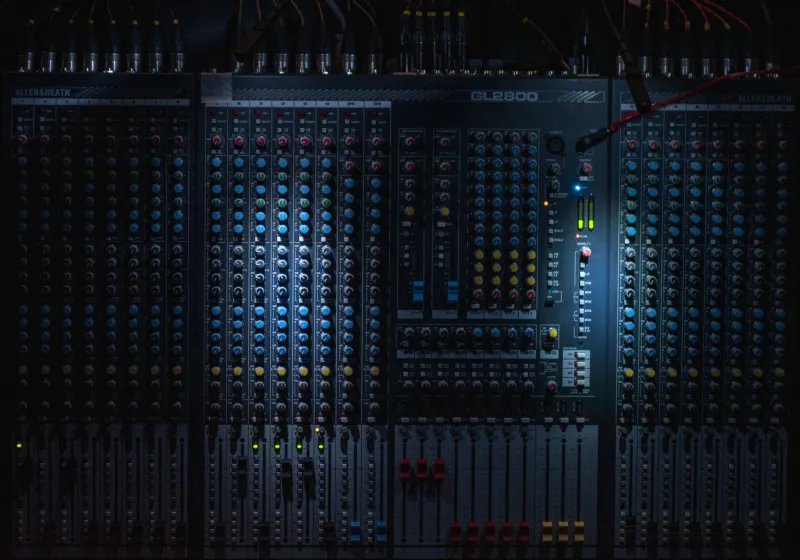
Horror sound designers are, in a very real sense, the scariest people in the film industry. They just happen to do all their haunting from a studio console, armed with nothing but frequencies, silence, and a deep understanding of exactly how to make your spine do things it really doesn't want to do.
And next time you feel that inexplicable dread creeping in before anything has even happened on screen? Go ahead and appreciate the craft. Someone worked very hard to make you feel exactly that way.