From Prey to Predator: How Horror's Leading Women Are Taking the Genre by the Throat
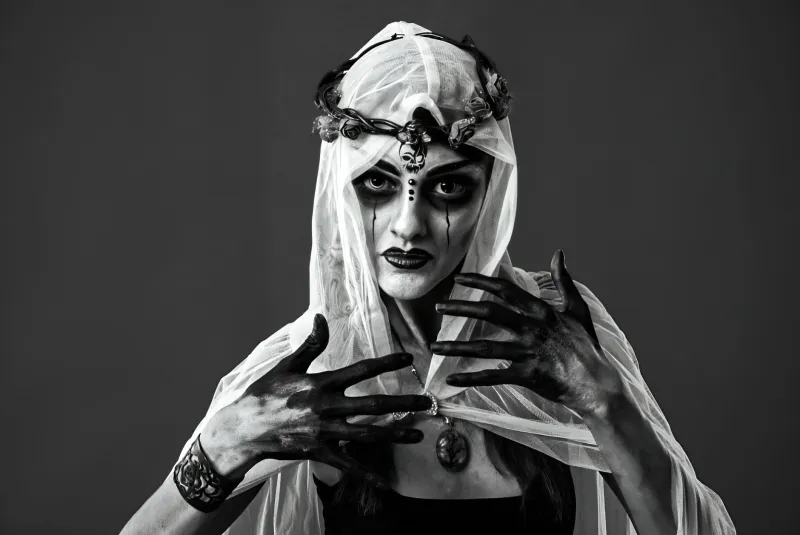
There's a moment in so many classic horror films you've probably memorized it without even trying. A woman — beautiful, breathless, terrified — backs herself into a corner while the monster closes in. She screams. She stumbles. She waits for something or someone to save her. It's a scene that defined decades of the genre.
Except that scene is getting harder and harder to find. And honestly? Good riddance.
Something seismic has been happening in horror over the last several years, and it goes way beyond surface-level girl-power optics. The women at the center of today's scariest films aren't simply surviving — they're engineering their survival. They're making morally ugly decisions, outsmarting threats before those threats even fully materialize, and occasionally becoming the most dangerous thing in the room. The shift is real, it's deliberate, and it says a lot about where audiences are at right now.
The Old Playbook (And Why It Wore Out Its Welcome)
To understand what's changed, you have to appreciate what the traditional final girl formula actually was. She was pure. She didn't drink, didn't sleep around, didn't make the "wrong" choices her friends made right before getting carved up. Her survival was almost a moral reward — a genre-coded stamp of virtue that said this one deserved to live.
That archetype had its power. Characters like Laurie Strode and Nancy Thompson resonated deeply because they were resourceful and resilient in ways audiences genuinely admired. But the formula also carried some uncomfortable baggage: the idea that a woman's survival had to be earned through a specific kind of behavior, that she had to be acted upon by horror before she could respond to it. She was reactive, not proactive. Scared first, brave second.
For a long time, that was the deal. Then filmmakers — and female filmmakers in particular — started tearing up the contract.
Agency as the New Weapon
Look at something like Hereditary or The Witch, and you'll notice that the horror isn't just happening to the women at the center of those stories — it's happening through them, around them, and sometimes because of choices they're actively making. These aren't passive recipients of supernatural punishment. They're participants in something much more complicated and morally murky.
That moral complexity is arguably the biggest evolution in how female horror protagonists are written today. Modern horror heroines are allowed to be wrong. They can make decisions that are selfish, ruthless, or ethically questionable — and the film doesn't punish them for it the way the old formula demanded. Midsommar's Dani doesn't just endure the horror around her; she ultimately chooses it in a way that's deeply unsettling precisely because it makes a certain kind of sense. You might not agree with her final decision, but you understand it. That's a far cry from the final girl who simply outlasted the killer by being the least morally compromised person in the group.
On the TV side, series like The Fall of the House of Usher and Brand New Cherry Flavor have leaned hard into female characters who are orchestrating events rather than reacting to them. These women have agendas. They have plans. Sometimes those plans are terrifying. And that's exactly the point.
Intelligence Over Innocence
One of the subtler but more meaningful changes is the way intelligence functions for female protagonists in horror now. In older slasher frameworks, being smart mostly meant knowing to not go into the basement. It was a defensive trait — a way of avoiding death rather than actively preventing it.
Now, intelligence is an offensive weapon. Think about the way female characters in films like Get Out (Missy Armitage's surgical psychological manipulation), Ready or Not, or Barbarian use knowledge, pattern recognition, and strategic thinking to either inflict horror or dismantle it. The smartest woman in the room in a modern horror film isn't just trying not to die — she's working out how to win.
Grace in Ready or Not is a perfect example. She starts the film as someone things are happening to, and ends it as someone who has fundamentally changed the terms of the situation she's in. Her arc isn't about discovering bravery — it's about discovering ruthlessness. The film treats that as a complicated gift rather than a simple triumph, which is exactly what makes it stick with you.
The Feminist Filmmaking Factor
It's worth acknowledging the pipeline here, because it's not a coincidence. More women are directing, writing, and producing horror than at any point in the genre's history, and that's showing up directly in how female characters are constructed on screen. Directors like Jennifer Kent (The Babadook), Rose Glass (Saint Maud), and Coralie Fargeat (Revenge, and more recently The Substance) are building female protagonists from the inside out — characters whose interiority, psychology, and decision-making feel grounded in actual female experience rather than male-gaze approximations of it.
The horror that emerges from that approach tends to be more personal and more unsettling, because it's rooted in fears and frustrations that feel genuinely specific. The body horror in The Substance isn't just viscerally gross (though it absolutely is) — it's making a precise, furious argument about how society consumes and discards women. The protagonist isn't a victim of random violence; she's caught in a system designed to destroy her, and she participates in her own destruction in ways that are heartbreaking and horrifying simultaneously. That's not a final girl story. That's something altogether different.
What Audiences Are Actually Asking For
Here's the thing about all of this: it's not just a filmmaker-led revolution. Audiences are voting for it with their attention, their streaming hours, and their word-of-mouth enthusiasm. Horror has always been a genre that reflects cultural anxiety back at its viewers, and right now, a lot of that anxiety is specifically about power — who has it, who doesn't, and what you're willing to do to get it or keep it.
Female horror protagonists who are complicated, strategic, and morally unresolved resonate because they feel true in a way that the punished-for-sinning, rescued-at-the-last-moment formula simply doesn't anymore. Audiences — not just women, but horror fans broadly — are hungry for characters whose survival feels earned through intelligence and choice rather than through moral purity or dumb luck.
The Rules Have Changed. The Monsters Better Catch Up.
None of this means the classic final girl is dead. Laurie Strode got a whole trilogy of second chances, and Jamie Lee Curtis made her one of the most compelling characters in recent horror memory precisely by leaning into what all those years of trauma had actually done to a person. Even traditional frameworks can be pushed and complicated by the right performer and the right script.
But the center of gravity in horror has shifted. The most interesting female protagonists in the genre right now aren't waiting to be saved, aren't defined by their innocence, and aren't playing defense. They're in the game — fully, dangerously, sometimes horrifyingly — and they're playing to win.
That's not just a change in storytelling. That's a change in what horror thinks women are capable of. And if you ask us here at ScreamOWeen, the genre is way scarier for it.