Why Your Favorite Horror Remake Probably Broke Your Heart (And Whose Fault It Actually Is)
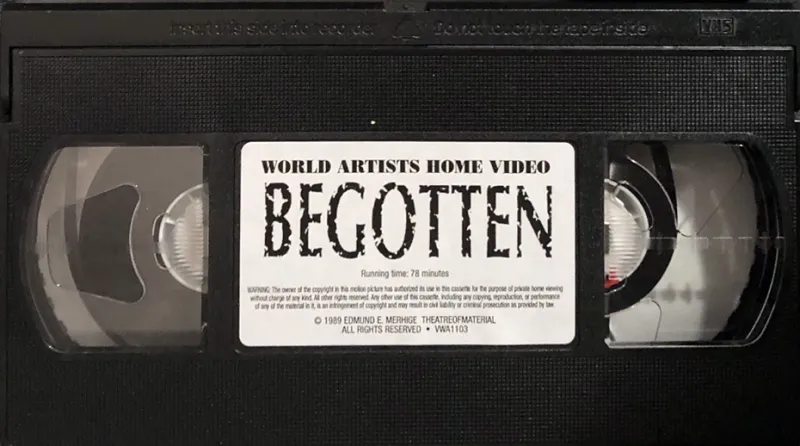
Photo: Label printed by World Artists Home Video, the distributor of the VHS., Public domain, via Wikimedia Commons
Why Your Favorite Horror Remake Broke Your Heart (And Whose Fault It Actually Is)
Let's talk about the 2013 Evil Dead remake. Not because it's the worst horror remake ever made — it isn't, not by a long shot — but because it's the most instructive. Fede Álvarez directed a technically accomplished, genuinely brutal film that understood visceral horror on a craft level. The gore was inventive. The pacing was relentless. And a significant portion of the original film's fanbase still felt vaguely cheated.
Why? Because Evil Dead was never just about the gore. It was about Sam Raimi's manic, almost accidental energy — the feeling that anything could happen because nobody was entirely sure what they were doing. You can't reconstruct that in a production with a real budget and a distribution deal. The thing that made it matter was the thing that couldn't be reproduced.
This is the central problem with '80s and '90s horror remakes, and Hollywood has been refusing to learn it for twenty years.
The IP Trap
Here's how most horror remakes get greenlit: a studio looks at a title with name recognition, calculates the built-in audience, and decides that familiarity is a competitive advantage. They're not entirely wrong — a Friday the 13th reboot will generate coverage that an original horror film with the same budget simply won't. The IP does marketing work that money can't fully replicate.
The problem is that this calculation treats the original film as a brand asset rather than a creative work. And when you approach source material as a brand, you start making brand decisions instead of creative ones.
Brand decisions look like: keep the iconic killer, keep the setting, keep the kills that went viral on YouTube, soften the edges that might alienate casual viewers, add a contemporary social media element because the marketing team suggested it. The result is something that resembles the original the way a theme park ride resembles the place it's based on — recognizable, optimized for throughput, fundamentally missing the texture of the real thing.
The 2009 Friday the 13th reboot is a masterclass in this failure. It's a competently made slasher. Jason looks great. The kills are solid. And it has almost none of the strange, specific atmosphere that made the original series a cultural phenomenon. It's horror content that happens to feature Jason Voorhees.
What Actually Made Those Films Work
To understand why remakes keep failing, you have to understand what the originals were actually doing — and it's rarely what people think.
A Nightmare on Elm Street (1984) wasn't successful because Freddy Krueger was a cool monster. It was successful because Wes Craven found a way to make sleep — the most universal human experience — feel like a death sentence. The dreamscape wasn't a special effects playground. It was an externalization of adolescent vulnerability, the feeling that you're never truly safe, not even in your own mind.
The 2010 remake had a bigger budget, a talented director in Samuel Bayer, and Jackie Earle Haley giving a genuinely committed performance as Freddy. What it didn't have was that core insight. It treated the dream sequences as set pieces rather than as the film's emotional architecture. Without the vulnerability, Freddy is just a guy with a knife glove.
Carrie has been remade twice since Brian De Palma's 1976 original, and both attempts (2002 and 2013) demonstrate the same misunderstanding. The original's power comes from De Palma's split-screen climax — a formal technique that puts Carrie's interior experience in direct visual conversation with the external chaos she's causing. It's not a stylistic flourish. It's the entire point. Strip that out, play the prom scene straight, and you've made a film about a girl who gets revenge. De Palma made a film about the horror of being witnessed.
The Nostalgia Math Doesn't Add Up
There's a generational problem baked into all of this that studios consistently miscalculate.
The audience that has deep emotional attachment to Hellraiser, Poltergeist, or Child's Play is not primarily looking for updated versions of those films. They want their memories validated — which is a fundamentally different ask than wanting new content. You cannot make a film that satisfies the nostalgia of someone who saw the original at fourteen. That experience is gone. The best you can do is make something new that's worthy of existing alongside it.
Meanwhile, younger audiences who don't have that nostalgic connection have no particular reason to prefer a remake over an original horror film. The IP recognition that makes the title marketable to one audience actively undercuts the film's credibility with another.
The Candyman spiritual sequel from 2021 understood this dynamic better than most. Nia DaCosta and Jordan Peele didn't try to recreate the 1992 original — they built on it, interrogated it, used it as a foundation for new ideas about violence, gentrification, and Black experience in America. It's not a remake. It's a continuation that earns its connection to the source material by having something new to say.
That's the template. Almost nobody follows it.
The Exceptions That Prove the Rule
Fair is fair: some horror remakes have actually worked, and examining why is more useful than just cataloguing failures.
John Carpenter's The Thing (1982) is technically a remake of The Thing from Another World (1951), and it's one of the greatest horror films ever made. But Carpenter wasn't trying to recreate the original — he went back to the source novella, Who Goes There?, and made a completely different film that happened to share an IP. The 1951 film barely existed as a reference point. He was making his own thing.
Marcus Nispel's Texas Chain Saw Massacre (2003) is genuinely divisive, but it worked commercially and critically in ways the subsequent sequels and prequels didn't because it understood that the original's power came from texture and dread rather than specific plot points. It changed almost everything except the feeling.
The common thread: the filmmakers weren't trying to reproduce what fans loved. They were trying to understand why fans loved it and then find their own path to that same emotional destination.
What Needs to Change
The horror community has gotten loud about this, and loudly enough that some studios are starting to listen — or at least to perform listening. But meaningful change requires more than casting announcements and respectful quotes about the original.
It requires hiring directors who have a genuine, specific vision for why this story needs to be told again — not directors who are competent craftspeople with no particular point of view. It requires giving those directors enough creative latitude to actually execute that vision. It requires treating the original's fanbase as an audience worth respecting rather than a guaranteed opening weekend to be monetized.
And it requires accepting that sometimes the honest answer is: this film doesn't need to be remade. Some originals are specific enough to their moment, their budget, their particular alchemy of circumstances, that the most respectful thing you can do is leave them alone.
The horror vault isn't going anywhere. Neither is the audience's patience for watching it get looted.
Get it right, or leave it in the dark where it belongs.