Hometown Haunts: Why American Regional Folklore Is Horror's Most Untapped Resource
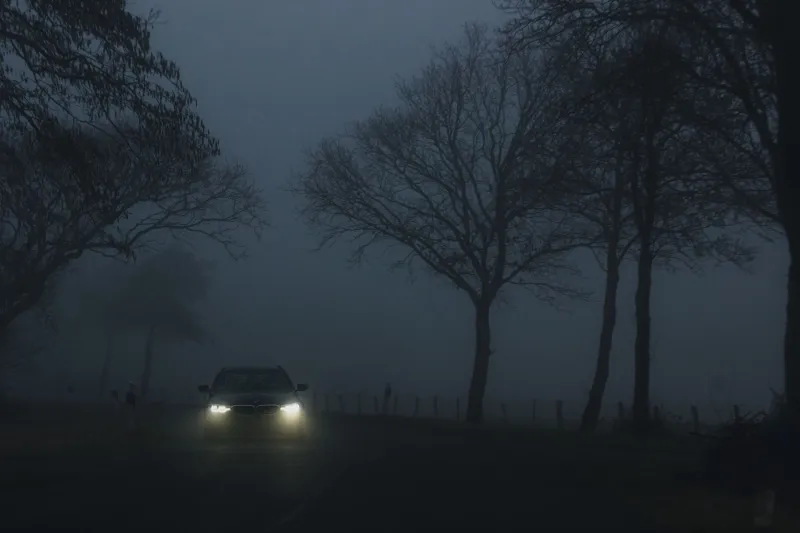
There's a particular kind of fear that hits different from anything a studio monster can manufacture. It's the fear that comes from a story your uncle told you about a specific stretch of road outside your hometown. The kind of legend that gets passed around at sleepovers with total sincerity. The ghost that supposedly haunts the old mill that everyone in your county knows about but nobody talks about loudly.
American regional folklore is soaked in this stuff — and horror's smartest creators have finally started paying serious attention.
The Problem With Universal Monsters
For a long time, mainstream horror leaned heavily on mythology that traveled well across borders. Vampires, werewolves, generic demons, masked killers with no specific geographic identity — these are creatures and concepts that work anywhere because they're rooted nowhere in particular. That universality was considered a feature. It meant your movie could open in Tulsa and Tokyo with equal accessibility.
But universality has a cost. Stories untethered from specific places, specific communities, and specific cultural histories tend to feel weightless. They're technically scary, but they don't burrow. They don't follow you home. The fear dissipates when the credits roll.
Contrast that with what happens when a horror story is rooted in a place you recognize — or a place so vividly specific that you feel like you could find it on a map. Suddenly the stakes feel different. The geography becomes part of the dread.
The Folk Horror Wave Hits American Soil
Folk horror as a genre label gained serious traction following the success of films like Midsommar and The Witch, both of which were rooted in specific cultural and geographic contexts (Scandinavian and Puritan New England, respectively). Critics and audiences started using the term more freely, and filmmakers started thinking more deliberately about place as a horror element.
What followed was a gradual but unmistakable turn toward specifically American folklore. And American folklore, it turns out, is extraordinarily fertile ground.
The United States is a country stitched together from hundreds of distinct regional identities, each with its own ghost stories, its own cautionary legends, its own local mythology. Appalachian horror — drawing on the deep, strange folklore of the mountain South — has emerged as its own recognizable subgenre. The bayou horror tradition of Louisiana carries a completely different atmosphere, rooted in Creole and Cajun cultural history. Pacific Northwest horror plays with the dense, fog-heavy geography and Indigenous legend traditions of that region. New England has always had its gothic credentials, but even that territory is being revisited with fresh eyes.
Each of these regional traditions offers something that generic horror simply can't: specificity. And specificity, in horror, is terrifying.
What's Working — and Why
Look at some of the recent standouts in this space and you start to see the pattern clearly.
The Black Phone, set in 1970s suburban Colorado, draws part of its power from its hyper-specific evocation of a particular American time and place. Them on Amazon Prime used the specific geography and racial history of mid-century Los Angeles to generate horror that hit with unusual force. Midnight Mass anchored its supernatural story to an isolated island community in a way that made the setting feel inseparable from the dread.
On the podcast side, shows like Lore built enormous audiences by mining local legends and historical dark spots from communities across the country. The appeal was explicit: these stories happened here, to people like us, in places you might actually visit. That proximity is what makes folklore-rooted horror land so hard.
The success of these projects has sent a clear signal to creators: audiences aren't just tolerating regional specificity. They're hungry for it.
America's Backyard Is Full of Bodies
Part of what makes American regional folklore such a rich vein for horror is the country's complicated, often violent history. Every region carries its own weight of unresolved stories — Indigenous histories that were suppressed or distorted, Civil War-era traumas that never fully healed, industrial disasters, mysterious disappearances, and the accumulated strangeness of communities that developed in isolation.
The Ozarks carry different ghosts than the Great Plains. The Florida swamps hold different horrors than the Nevada desert. New Orleans has a relationship with death and the supernatural that's embedded in the city's actual architecture and cultural practice. Chicago's history of organized crime and urban violence has generated its own mythology. Appalachia's isolation produced a folklore tradition that's still being documented by ethnographers today — and that horror writers are only beginning to tap.
This isn't about exploitation. The best folk horror treats its source material with genuine curiosity and respect, engaging with the cultural context rather than simply strip-mining it for scary imagery. When that care is present, audiences — particularly audiences from those regions — respond with fierce loyalty. There's something powerful about seeing your hometown's weird legend treated as worthy of serious storytelling.
The Creator Opportunity
For independent filmmakers, podcasters, game designers, and writers, the regional folklore angle represents a genuine competitive advantage. Major studios aren't going to greenlight a feature film about a specific ghost legend from rural West Virginia. But an independent creator with deep knowledge of and connection to that community can build something authentic that a studio couldn't replicate if it tried.
The tools available to independent horror creators have never been better. Low-budget filmmaking technology, podcast distribution platforms, self-publishing infrastructure, and the ability to build direct audiences through social media mean that hyperlocal horror stories can find their people without going through traditional gatekeepers.
Some of the most exciting horror content being made right now is coming from creators who are essentially documenting and fictionalizing the dark histories of their own communities. That's not a niche strategy — it's a connection to something real that mass-produced horror will always struggle to manufacture.
The Map Is the Monster
What folk horror understands — and what its current practitioners are proving — is that place itself can be a source of horror. Not just as a setting, but as an active element of the story. The land remembers. The town knows. The road doesn't want you on it after dark.
American geography is vast, varied, and full of stories that have never been properly told. Every state, every region, every weird small town with its local legend about the abandoned house on the hill is sitting on material that horror has barely touched.
The creators who go looking for those stories — who actually drive out to the places where the legends live and talk to the people who grew up with them — are going to find horror that's genuinely new. Not because the stories haven't been told before, but because they've never been told to everyone.