Beyond the Scream: How Horror Heroines Stopped Running and Started Winning
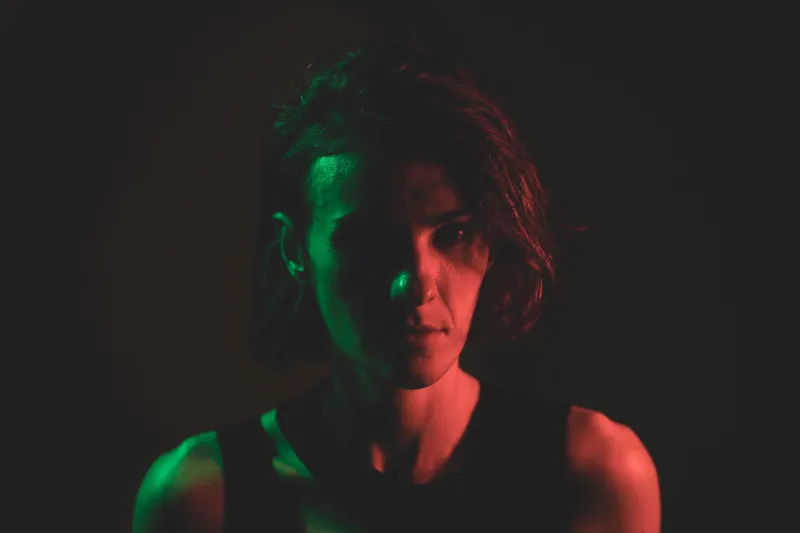
There's a moment in almost every classic horror film that horror fans could set their watches to — the woman trips, the monster looms, the camera lingers a beat too long on her terror. For decades, that beat was basically the genre's heartbeat. It was reliable, it was profitable, and it was, let's be honest, pretty lazy storytelling.
Something cracked open in the last several years, though. If you've been paying attention to what's been dropping in theaters and on your streaming apps, you've probably felt it even if you couldn't name it. The women in horror aren't just lasting until the credits anymore. They're the ones deciding who makes it that far.
The Scream Queen's Long Shadow
To understand where we are now, it helps to give credit where it's actually due. The Scream Queen — that iconic, shrieking centerpiece of '70s and '80s horror — wasn't as powerless as pop culture memory tends to paint her. Jamie Lee Curtis in Halloween, Sigourney Weaver's Ellen Ripley, even Neve Campbell's Sidney Prescott in Scream — these women fought back, adapted, and endured. They were never purely passive.
But the critical difference between those archetypes and what we're watching now is agency before the crisis hits. The classic Final Girl was reactive. She responded to the monster. Today's horror heroines are increasingly proactive — they're reading the room, setting traps, and sometimes being the threat that everyone else in the story underestimates.
That shift changes everything about how a horror story is structured.
Trauma as a Tool, Not a Wound
One of the most fascinating pivots in modern horror is the way female protagonists are being written to use their trauma rather than be paralyzed by it. This isn't a small storytelling tweak — it's a fundamental reframe of what the genre considers strength.
Take Midsommar. Dani Ardor walks into that film shattered by grief, and the entire audience is conditioned to see her as the vulnerable one in the group. But Ari Aster's script — and Florence Pugh's extraordinary performance — slowly reveals that Dani's emotional fluency, her capacity to feel everything fully, is precisely what makes her the most dangerous person at that ritual. She doesn't survive in spite of her pain. She ascends through it.
Or look at Fresh (2022), where Daisy Edgar-Jones's Noa turns the tables on a predator in ways that require her to out-think, out-manipulate, and out-endure someone who thought he had every advantage. Her intelligence and her ability to compartmentalize under pressure — skills she developed navigating the nightmare of modern dating, of all things — become her actual survival toolkit.
These aren't women who got lucky. They're women who got strategic.
Sexuality as Power, Not Vulnerability
Horror has a complicated, often gross history with female sexuality. For a long time, the genre's unspoken rulebook basically stated that a woman's sexual agency was a death sentence. Sleep with someone in a slasher film and you were marking yourself for the third act kill.
Contemporary horror has been systematically torching that rulebook.
Jennifer's Body — which bombed on its 2009 release but has since been correctly recognized as ahead of its time — put a sexually confident woman at the center and made her the predator, not the prey. The film's rehabilitation in popular culture over the last decade says a lot about how audiences have evolved in what they're ready to receive.
More recently, films like Titane and Bodies Bodies Bodies use female sexuality not as a liability but as a source of complexity, unpredictability, and power. These characters can't be easily categorized by the old horror taxonomy, and that ambiguity is exactly what makes them so compelling — and so hard for their on-screen antagonists to anticipate.
The Architecture of Vengeance
Perhaps the clearest signal of this evolution is the rise of the horror heroine who doesn't just want to escape — she wants justice. Or something darker than justice. Something that looks a lot more like revenge.
The rape-revenge subgenre has existed for decades, but its modern iterations are more psychologically nuanced and less exploitative than their predecessors. Films like Promising Young Woman — which blurs the line between thriller and horror to brilliant effect — feature women who have constructed elaborate, long-game strategies for confronting the systems and individuals that harmed them. Carey Mulligan's Cassie isn't running from anything. She built a whole life around the hunt.
Similarly, in horror series and anthology content, we're seeing more female characters who arrive at the story having already processed what happened to them and are now operating from a place of cold, deliberate purpose. That's a fundamentally different emotional register than the terrified survivor, and it creates a completely different kind of tension for the audience.
What This Means for the Genre
Here's the thing that doesn't get talked about enough: this shift isn't just good for representation. It's making horror scarier.
When a protagonist is purely reactive, the audience's fear is essentially outsourced to the monster. We're afraid of what the creature or killer might do. But when the protagonist is an active, intelligent agent — when she's capable of genuine menace herself — the fear becomes more distributed, more unpredictable. We don't always know who to root for. We're not sure what the rules are anymore. And uncertainty is horror's most potent ingredient.
The best modern horror films are exploiting this beautifully. They're giving us women who are capable of breathtaking violence, morally complex decisions, and outcomes that don't fit neatly into "she survived" or "she didn't." The ambiguity is the point.
Where We Go From Here
None of this means the genre has fully shed its baggage. For every Midsommar or Fresh, there are still plenty of productions leaning on outdated tropes because they're familiar and they sell. The market for lazy horror is not going away anytime soon.
But the conversation has shifted in ways that feel genuinely irreversible. Audiences — particularly younger audiences who grew up watching these films and talking about them online with real critical vocabulary — are increasingly impatient with female characters who exist only to be menaced. They want complexity. They want women who are as frightening as the things hunting them.
The horror genre, at its best, has always been a mirror held up to cultural anxieties. Right now, one of the most potent anxieties in American life is about power — who has it, who's denied it, and what people are willing to do to reclaim it. It makes complete sense that horror is processing that anxiety through its heroines.
The scream is still there. It just sounds a lot more like a battle cry these days.