The Great Candy Bowl Audit: What You're Handing Out This October Says More Than You Think
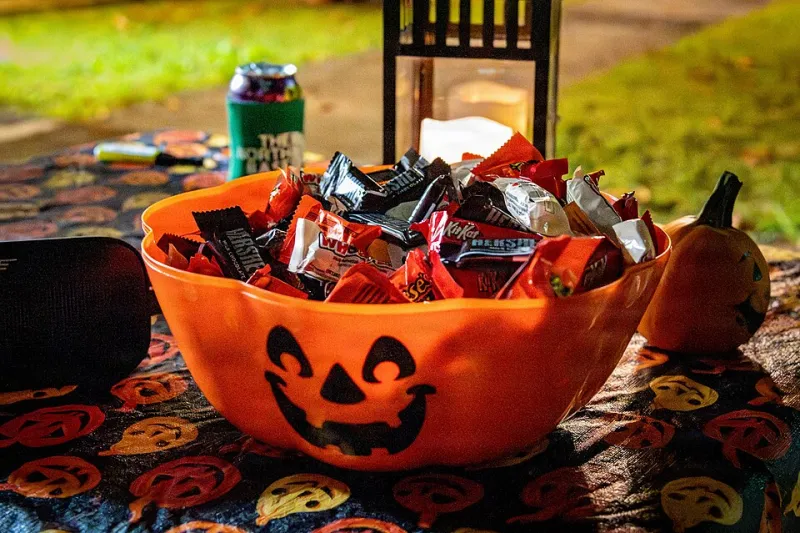
Photo: U.S. Air Force photo by Airman 1st Class Jessel Fabara, Public domain, via Wikimedia Commons
Every October 31st, millions of Americans make a quiet, unspoken declaration of values. It's not on a yard sign. It's not in a voting booth. It's in the candy bowl on the porch.
You know the one. Maybe it's overflowing with fun-size Kit Kats. Maybe it's a sad single bag of Necco Wafers you panic-bought at 4 p.m. Maybe — and we say this with love — it's a box of raisins, and if so, we need to talk.
Here at ScreamOWeen, we got curious about what the great candy distribution economy actually looks like, so we dug into the data, chatted with folks who work in the confectionery world, and built a rough field guide to what your Halloween handout says about your zip code.
The Full-Size Flex
Let's start at the top of the food chain: the full-size candy bar house.
These are the legends. The houses kids whisper about in line. Handing out full-size Snickers or a fist-sized Reese's cup isn't charity — it's a statement. It says, I planned for this. I respect you. I may be announcing a congressional run soon.
According to the National Confectioners Association, chocolate consistently dominates Halloween sales, and full-size bars have become the fastest-growing segment of trick-or-treat purchases over the last decade. It's a prestige economy, plain and simple. One full-size bar is worth roughly three to four fun-size equivalents, and kids know the exchange rate cold.
"We call it the porch premium," one regional distributor told us, half-joking. "Certain neighborhoods just won't do fun-size anymore. It's a keeping-up-with-the-Joneses thing, except the Joneses have a cauldron of King-Sized Twix."
The Fun-Size Middle Class
The vast majority of American porches live in fun-size territory, and honestly? That's fine. That's the system working as intended.
The real differentiator within this tier is curation. There's a difference between the house with a thoughtfully assembled variety pack — chocolate, gummies, something peanut-free for the allergy kids — and the house that dumps in one bag of whatever was on endcap sale and calls it a day.
The variety-pack strategists have done the math. Candy industry data shows that mixed bags outsell single-brand bags nearly two to one during Halloween season, precisely because homeowners are hedging. Nobody wants to be the house with 200 remaining Almond Joys at 8:30 p.m.
And about those Almond Joys: every region has its undistributed inventory. Northeasterners apparently love them, which explains a lot about the Northeast. Meanwhile, candy corn remains the most polarizing item in the American candy canon — purchased in staggering quantities, eaten by roughly half the population, and used as porch decoration by the other half.
The Regional Map of Betrayal
Now for the part you've been waiting for: regional rankings.
The Midwest remains the gold standard of trick-or-treat generosity — generous portions, enthusiastic porch decor, and a cultural commitment to the holiday that borders on the civic. If Halloween were a tax base, Ohio would be funding three school districts.
The South leans hard into variety and volume, with an admirable tolerance for non-chocolate options that the coasts could learn from.
The West Coast is where you'll find the, let's say, alternative offerings: organic lollipops, mini boxes of raisins, and the occasional toothbrush from a well-meaning dentist. The intentions are pure. The children's reactions are not.
The Northeast runs hot and cold — some of the most legendary full-size houses in the country, sitting directly adjacent to apartments that hand out loose Smarties like they're dealing cards.
And the raisin thing? Look. We understand that someone, somewhere, is buying those little boxes. We just ask that you do it in private.
So What's the Winning Strategy?
After all this analysis, the crowning champion strategy is almost boringly simple: buy a variety pack weighted toward chocolate, throw in one wildcard (Skittles, Airheads, something sour), and — this is the key move — buy 20% more than you think you need. Running out is the only true Halloween failure state. Turning off the porch light at 7:45 p.m. is a wound a neighborhood doesn't forget.
The candy bowl, it turns out, is a mirror. It reflects how much you planned, how much you care, and whether you understand that Halloween is, for one night, the one evening all of America agrees to be generous to strangers in costumes.
Hand out the good stuff. The monsters are watching.