Gourd Money: Inside the Cutthroat World of Championship Pumpkin Carving
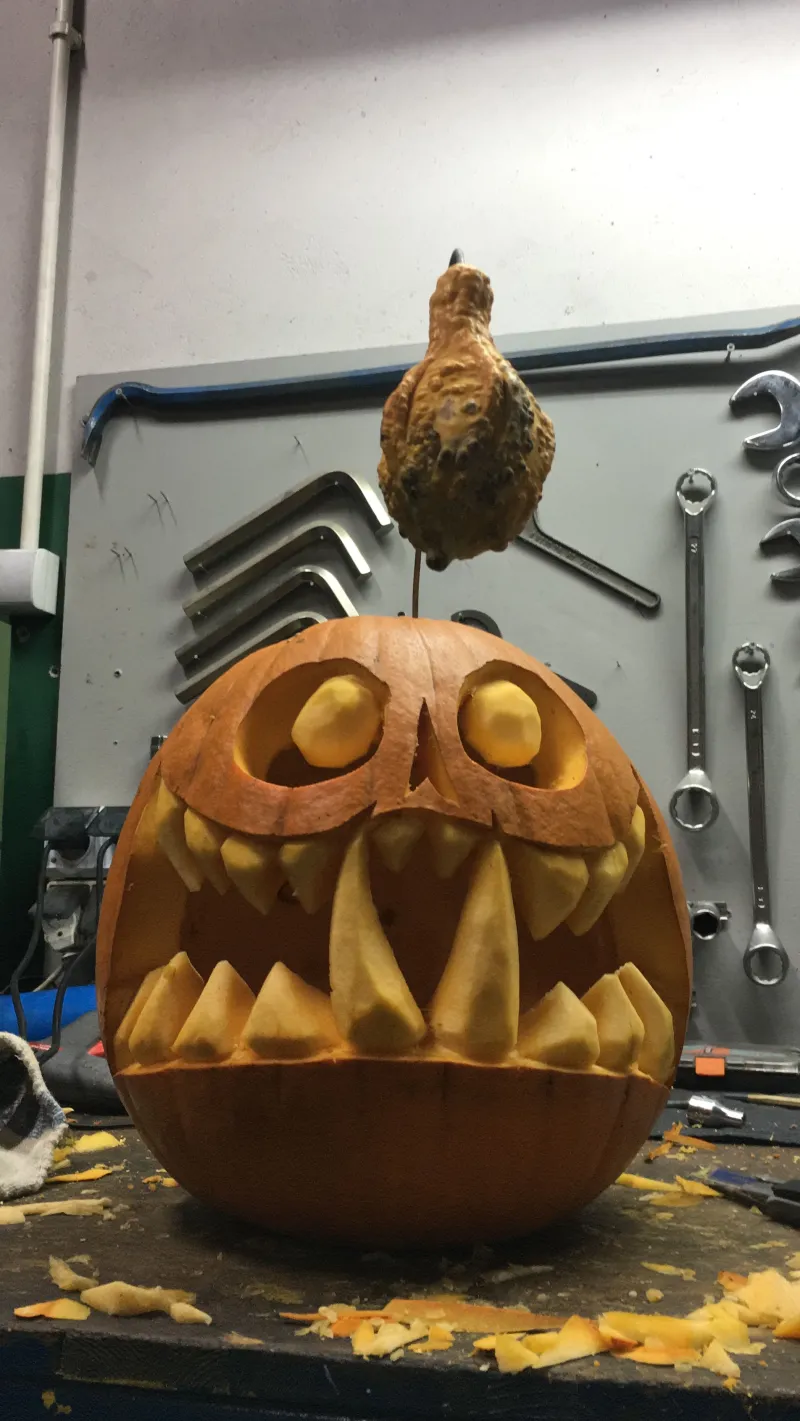
Photo: professional pumpkin carving competition detailed jack-o-lantern sculpture, via i.pinimg.com
The pumpkin doesn't stand a chance.
Dana Whitfield circles it twice, the way a boxer circles an opponent. It's a 1,400-pound giant from a grower in rural Ohio, hauled in on a pallet jack, and in nine hours it needs to be something else entirely — a roaring skull, a dragon mid-scream, a portrait of Vincent Price rendered in nothing but depth and light. This is the Northeast Pumpkin Arts Championship, and Dana is defending a title.
Welcome to competitive pumpkin carving, where the jack-o'-lantern you made with a paring knife in 1997 would not survive the preliminary round.
From Kitchen Table to Main Stage
The transformation happened faster than most people realize. Twenty years ago, pumpkin carving was a family activity you did on newspaper with a flimsy plastic saw from a drugstore kit. Today, it's a competitive circuit with regional championships, sponsored carvers, and — yes — prize money that can reach four figures at the top events.
The shift came from two directions at once. First, the tools got serious. Clay ribbon loops, wood gouges, Dremel rotary tools, and specialty sculpting kits turned the pumpkin from a candleholder into a legitimate sculptural medium. Second, the internet showed up. Time-lapse carving videos racked up millions of views, and suddenly pumpkin patch owners and fall festivals wanted headliner carvers the way county fairs wanted demolition derbies.
"People see a finished piece under stage lighting and they don't believe it's a pumpkin," Dana told us between rounds. "Then they watch you make one in six hours with a power tool and half a bag of luck, and they never look at the porch pumpkin the same way."
Anatomy of a Championship Carve
Here's what separates the pros from the newspaper-and-paring-knife crowd.
The selection. Competition pumpkins aren't chosen at the grocery store. Carvers work with specialty growers who breed for wall thickness, density, and color consistency. A championship pumpkin can cost several hundred dollars before a single cut is made.
The tools. A competitive carver's kit looks more like a woodworker's or a dentist's than a Halloween decoration box: ribbon loops for removing large sections of rind, fine gouges for shading, and rotary tools for detail work so delicate it's done at the texture of skin.
The technique. The real magic isn't cutting through — it's cutting partially through. Pro carvers work in relief, shaving the pumpkin's wall to different thicknesses so light passes through in gradients. A portrait's highlight might be paper-thin; its shadow stays nearly untouched. Done right, the finished piece glows like a lithophane.
The clock. Most competition carves run four to nine hours, live, in front of festival crowds who wander up and ask questions like "Is that real?" (It is. It always is.)
The Season of the Gourd
A competitive carver's year is a strange inverted calendar. Spring and summer are quiet — planning designs, testing patterns on practice pumpkins, maintaining sponsor relationships. September through early November is pure chaos: festivals every weekend, demonstrations at pumpkin patches, corporate events, and the championship circuit that culminates in late October.
The money is real but modest at most levels. Regional prizes run a few hundred dollars; the flagship championships can pay $2,000 or more for first place, plus carving fees for festival appearances. The carvers who make it work treat it like a gigging musician treats bar gigs — a string of October weekends that fund the passion for the rest of the year. The real value, most say, is the audience: there is no better marketing for a sculptor than six hours of a crowd watching you carve a screaming face into a 400-pound vegetable.
Your Jack-o'-Lantern Isn't Bad. It's Just Not This
Here's the good news for the rest of us: the pro techniques scale down beautifully. You don't need a 1,400-pound giant or a rotary tool collection to level up your porch game.
Start with a thicker-walled pumpkin — ask your patch for a carving variety rather than a field pumpkin. Ditch the pattern-poking kit and try surface carving instead: shave the skin off in sections with a linoleum gouge, then scrape the flesh beneath to different depths. Put an LED light inside instead of a candle, so you can actually control the glow and the thing doesn't cook itself by Halloween.
Will your first attempt look like Dana's? No. Will it look better than the triangle-eyed classic from your childhood? Absolutely. And that's the whole point of the competitive scene, Dana insists — not to intimidate the porch carvers, but to show them what the humble gourd can do.
"Every pro carver started with a drugstore saw and a pattern from a magazine," Dana says, sweeping shavings off the table. "The pumpkin doesn't care about your skill level. It's just waiting to be something scarier."
October is coming. The gourds are ready.